


Have a good Christmas, @Saranna!
I am now reviewing all the 'Return of the Shadow' material I have generated in light of my series of SWG posts on LotR and on Beowulf. I am reading what these drafts signify in ways I had not before. Something is working!
Happy New Year!
The Miller's Tale. HGS V.II, OOC
- Points: 4 777

Tree
Posts: 3136
Joined: Sun May 17, 2020 7:54 pm
Last edited by Chrysophylax Dives on Fri Dec 20, 2024 2:47 pm, edited 1 time in total.
Eat earth. Dig deep. Drink water.
- Points: 4 777
Tree
Posts: 3136
Joined: Sun May 17, 2020 7:54 pm
@Drifa, try thinking a Ringwraith into my picture of the Straight Road in 'Fusion'. We walk East, to Doom = Death. The Doom of Elves is not to die, and they walk both directions on the Straight Road, and sail over the Sea. A Ringwraith travels from Doom at the center, out into the world, riding west; a mortal doomed to die who flees Doom and turns around to take the opposite direction on the Straight Road, returning as a wraith.
Recall the Woody End, where converge three different modes of walking the Straight Road: Hobbits, Elves, Ringwraiths.
Recall the Woody End, where converge three different modes of walking the Straight Road: Hobbits, Elves, Ringwraiths.
Eat earth. Dig deep. Drink water.
- Points: 3 819

Mahal
Posts: 3176
Joined: Wed Aug 05, 2020 3:32 pm
But but , did not some of the Ringwraiths travel the straight road from Numenor?
The world was fair in Durin's Day.
- Points: 4 777
Tree
Posts: 3136
Joined: Sun May 17, 2020 7:54 pm
Not as Ringwraiths.
The Ringwraith is like a corpse sent to Valinor in one of the funeral ships of the exiles from Numenor, only inland - and magically achieving the false promise of undying life (while the corpses in the ships, if not fired, just sail out to sea and eventually sink, or end up in America).
A Numenorean who crosses the sea with Elendil and then becomes a Ringwraith is actually a version of the two sea-crossing of the exordium to 'Beowulf', the second of which is a sea-funeral.
_________
There is a 'machinery' which I am abysmally failing to explain. This also probably will not help.
From the exordium (first 52 lines) of the Anglo-Saxon poem, with its ship-arrival and ship-funeral of Scyld Scefing, Tolkien derives the cardinal distinction of 'Fall of Numenor': (flat-world) Myth vs. (round world) History. 'The Fall of Numenor' dedicates a cosmic Elvish myth to explaining what has happened in 'Beowulf' between the first and the second ship.
The ship bearing Scyld Scefing arrives out of Myth.
The ship-funeral is in History.
Consequently, the funeral-ship is an error, a heathen confusion, for sailing into the historical West will never discover the mythical Straight Road into the true West.
As Tolkien's Elves tell it: Those who are not confused, who are friends with Elves and recall the true traditions, do not send ships into the West but rather build high towers so they may look into the West.
When Tolkien transposes this into his own stories, Elendil indeed sails out of myth, but he walks only eastward on the inland Straight Road - to his Doom in Mordor, and then is buried in the center of Gondor. Elendil begins in Myth and ends in history.
A mortal man who sails with Elendil out of Numenor and then takes a magic ring from Sauron the Necromancer and becomes a Ringwraith returns into Myth.
His fate is the false lie of Sauron that destroyed Numenor, the promise that mortals can escape their doom, magically realized. The ship-funeral works, and these mortals learn the same lesson that Sam is taught in Lorien when he wishes to see some Elf-magic: be careful what you ask for!
The Ringwraith is like a corpse sent to Valinor in one of the funeral ships of the exiles from Numenor, only inland - and magically achieving the false promise of undying life (while the corpses in the ships, if not fired, just sail out to sea and eventually sink, or end up in America).
A Numenorean who crosses the sea with Elendil and then becomes a Ringwraith is actually a version of the two sea-crossing of the exordium to 'Beowulf', the second of which is a sea-funeral.
_________
There is a 'machinery' which I am abysmally failing to explain. This also probably will not help.
From the exordium (first 52 lines) of the Anglo-Saxon poem, with its ship-arrival and ship-funeral of Scyld Scefing, Tolkien derives the cardinal distinction of 'Fall of Numenor': (flat-world) Myth vs. (round world) History. 'The Fall of Numenor' dedicates a cosmic Elvish myth to explaining what has happened in 'Beowulf' between the first and the second ship.
The ship bearing Scyld Scefing arrives out of Myth.
The ship-funeral is in History.
Consequently, the funeral-ship is an error, a heathen confusion, for sailing into the historical West will never discover the mythical Straight Road into the true West.
As Tolkien's Elves tell it: Those who are not confused, who are friends with Elves and recall the true traditions, do not send ships into the West but rather build high towers so they may look into the West.
When Tolkien transposes this into his own stories, Elendil indeed sails out of myth, but he walks only eastward on the inland Straight Road - to his Doom in Mordor, and then is buried in the center of Gondor. Elendil begins in Myth and ends in history.
A mortal man who sails with Elendil out of Numenor and then takes a magic ring from Sauron the Necromancer and becomes a Ringwraith returns into Myth.
His fate is the false lie of Sauron that destroyed Numenor, the promise that mortals can escape their doom, magically realized. The ship-funeral works, and these mortals learn the same lesson that Sam is taught in Lorien when he wishes to see some Elf-magic: be careful what you ask for!
Eat earth. Dig deep. Drink water.
- Points: 3 819
Mahal
Posts: 3176
Joined: Wed Aug 05, 2020 3:32 pm
I was drinking ale when I asked that question, but they did leave Numenor as Men; you are correct, not as Ringwraiths.  There were evil Númenóreans. Maybe these fellows were corrupted before they left -sneaking on the ships in disguise, but Sauronian lickspittles.
I am sure you explain it well, dragon. I get it but can not discuss it with you because, you know, I lack the skill of discussing. And, without reading 'Beowulf,' it is harder to see. Can you point me to a good copy of the poem so I can read it at some point?
Moving off the 'Fusion' topic, I like this quote by Tolkien.
There were evil Númenóreans. Maybe these fellows were corrupted before they left -sneaking on the ships in disguise, but Sauronian lickspittles. I am sure you explain it well, dragon. I get it but can not discuss it with you because, you know, I lack the skill of discussing. And, without reading 'Beowulf,' it is harder to see. Can you point me to a good copy of the poem so I can read it at some point?
Moving off the 'Fusion' topic, I like this quote by Tolkien.
He finally induces Arpharazôn, frightened by the approach of old age, to make the greatest of all armadas, and go up with war against the Blessed Realm itself, and wrest it and its 'immortality' into his own hands.*
* This was a delusion of course, a Satanic lie. For as emissaries from the Valar clearly inform him, the Blessed
Realm does not confer immortality. The land is blessed because the Blessed dwell there, not vice versa, and the Valar
are immortal by right and nature, while Men are mortal by right and nature. But cozened by Sauron he dismisses all this
as a diplomatic argument to ward off the power of the King of Kings. It might or might not be 'heretical', if these myths
were regarded as statements about the actual nature of Man in the real world : I do not know. But the view of the myth
is that Death — the mere shortness of human life-span – is not a punishment for the Fall, but a biologically (and
therefore also spiritually, since body and spirit are integrated) inherent part of Man's nature. The attempt to escape it is
wicked because 'unnatural', and silly because Death in that sense is the Gift of God (envied by the Elves), release from
the weariness of Time. Death, in the penal sense, is viewed as a change in attitude to it: fear, reluctance. A good
Númenórean died of free will when he felt it to be time to do so. 156 To Robert Murray, SJ. (draft),The Letters Of J.R.R. Tolkien
The world was fair in Durin's Day.
- Points: 4 777
Tree
Posts: 3136
Joined: Sun May 17, 2020 7:54 pm
Good quote. You may lack the skill in discussing, Dwarf. The question is what you can see with your eye? My picture is simply a riddle that is illuminated when placed against the right texts, only in this case the answer to the riddle in turn illuminates those texts.
I may put up a Fangorn riddle soon, if nobody else does. Then there will be 3 riddles of mine on the plaza that you cannot see.
I may put up a Fangorn riddle soon, if nobody else does. Then there will be 3 riddles of mine on the plaza that you cannot see.
Eat earth. Dig deep. Drink water.
- Points: 4 777
Tree
Posts: 3136
Joined: Sun May 17, 2020 7:54 pm
On 'Beowulf', I recommend the 2007 movie. That gives you the basics and, while much liberty is taken with the poem, most is justified and some is illuminating - even Angelina Jolie as Grendel's mother, though it might seem a flagrant modernization, is digging the same biblical reference that Tolkien was pondering (the poet names the biblical Cain as the father of the monsters of northern mythology).
The movie follows the poem faithfully in drawing an elegy in two parts: the most part is the young hero who slays Grendel and (in the movie) is 'slain' by Grendel's mother; the final part, which gives meaning to the first, is the old Beowulf, now king, who steps up once more to fight one last monster, the dragon.
Here are two movie liberties taken with the poem: The movie sets the first part in heathen Denmark and the final part in a Christian Denmark.
This is wrong, firstly because the poem is set solely in heathen times, and secondly because the second part is set in Beowulf's native Geatland (southern Sweden). But from Tolkien's reading of the poem (which is all I can give), both changes can be justified.
Firstly, the poem was composed for a Christian audience, and the juxtaposition of the two perspectives, an imagined heathenism of the ancestors and the truth as now understood by a recently converted people, is vital to how the poem is structured and what the poet was trying to do. The movie gives a nod to the poem's double-sided vision.
Secondly, in his great 1936 defence of the poem at the British Academy, Tolkien conceded a few defects. The chief that he circled was the setting of the poem in two geographical settings: each time he read the poem, he said, he felt that the two parts should have been in one place. And this is what the movie does.
None of that touches the two ships of the exordium, which I seem to recall the movie passes over.
The movie follows the poem faithfully in drawing an elegy in two parts: the most part is the young hero who slays Grendel and (in the movie) is 'slain' by Grendel's mother; the final part, which gives meaning to the first, is the old Beowulf, now king, who steps up once more to fight one last monster, the dragon.
Here are two movie liberties taken with the poem: The movie sets the first part in heathen Denmark and the final part in a Christian Denmark.
This is wrong, firstly because the poem is set solely in heathen times, and secondly because the second part is set in Beowulf's native Geatland (southern Sweden). But from Tolkien's reading of the poem (which is all I can give), both changes can be justified.
Firstly, the poem was composed for a Christian audience, and the juxtaposition of the two perspectives, an imagined heathenism of the ancestors and the truth as now understood by a recently converted people, is vital to how the poem is structured and what the poet was trying to do. The movie gives a nod to the poem's double-sided vision.
Secondly, in his great 1936 defence of the poem at the British Academy, Tolkien conceded a few defects. The chief that he circled was the setting of the poem in two geographical settings: each time he read the poem, he said, he felt that the two parts should have been in one place. And this is what the movie does.
None of that touches the two ships of the exordium, which I seem to recall the movie passes over.
Eat earth. Dig deep. Drink water.
- Points: 792

Newborn of Imladris
Posts: 312
Joined: Sun May 17, 2020 10:25 am
Happy New Year @Chrysophylax Dives and everyone. Good to be back in the real world (!) and I will be keeping an eye on these threads to learn more and more about our common interest.
Some of you may like to know about Alan Garner's latest book, which I had as a Christmas present (and read straight away.) It's called Powsels and Thrums, which should intrigue you. See you soon.
Some of you may like to know about Alan Garner's latest book, which I had as a Christmas present (and read straight away.) It's called Powsels and Thrums, which should intrigue you. See you soon.
Remembering halfir by learning something new each day
- Points: 4 777
Tree
Posts: 3136
Joined: Sun May 17, 2020 7:54 pm
Happy New Year (again), @Saranna!
My own research has gone off-line for a while. Time to go over what I have and plan the last part in peace and quiet. I've just been reading the compilation of posts that I sent you and sighing over the work that is required to smooth things out.
My own research has gone off-line for a while. Time to go over what I have and plan the last part in peace and quiet. I've just been reading the compilation of posts that I sent you and sighing over the work that is required to smooth things out.
Eat earth. Dig deep. Drink water.
- Points: 4 777
Tree
Posts: 3136
Joined: Sun May 17, 2020 7:54 pm
@Saranna, I was thinking of this as a title. What do you think?
Spiral Staircase:
The Design of The Lord of the Rings
Spiral Staircase:
The Design of The Lord of the Rings
Eat earth. Dig deep. Drink water.
- Points: 4 777
Tree
Posts: 3136
Joined: Sun May 17, 2020 7:54 pm
@Arnyn, et al. Feel free to unpin this thread anytime. It has helped me get from A to B. Now it can drop away. And thankyou all for the pin!
Eat earth. Dig deep. Drink water.
- Points: 6 930

Steward of Gondor
Posts: 3613
Joined: Thu May 14, 2020 3:34 pm
Done, darling.
Arnyn ~ Honor & Valor
Kaylin ~ Joy & Strength
Kaylin ~ Joy & Strength
- Points: 792
Newborn of Imladris
Posts: 312
Joined: Sun May 17, 2020 10:25 am
@Chrysophylax Dives Good title - design is often a left-out category in both writing and critical studies.
I have, I think, all the material, you sent me safely in my iPad, would it help if I read it and made/sent notes or would that be irritating?
For myself, I must go back to to the (probably ill-designed) novel. But will keep checking in here. Roleplay seems to have diminished but I don't findthat distressing, there may be room for it later. Old Librarians never die, they simply become an elf and go on forever!
I have, I think, all the material, you sent me safely in my iPad, would it help if I read it and made/sent notes or would that be irritating?
For myself, I must go back to to the (probably ill-designed) novel. But will keep checking in here. Roleplay seems to have diminished but I don't findthat distressing, there may be room for it later. Old Librarians never die, they simply become an elf and go on forever!
Remembering halfir by learning something new each day
- Points: 4 777
Tree
Posts: 3136
Joined: Sun May 17, 2020 7:54 pm
@Saranna,
Thank you on the title!
Thank you also for the offer. On reflection, I would rather receive comments on an updated draft. In those posts, there is much that I will keep just as it is, but there are some glaring problems, things which were not finished when the deadline fell so went in half-baked, and these I would like to fix before anything else.
Actually, ironically, the chief of these half-baked theses in those posts is right at the beginning, when I failed to properly read 'Note on the Shire Records' and messed up on Undertowers!
Possibly all those Undertowers posts in the Shire addled my brain, or at least clear reading of the source material. I think what I need to do first and foremost is pen the history of Undertowers correctly. And I'll post the fruit of that here when it is ready, partly to make some ammends for all my off-key Undertowers posting. This might be what moves the Adamanta Chubb Librarian and her assistant back into the Third Age, with a genuine Stone set up in the western tower, the Stone of Elendil.
PS. Thank you @Arnyn!
Thank you on the title!
Thank you also for the offer. On reflection, I would rather receive comments on an updated draft. In those posts, there is much that I will keep just as it is, but there are some glaring problems, things which were not finished when the deadline fell so went in half-baked, and these I would like to fix before anything else.
Actually, ironically, the chief of these half-baked theses in those posts is right at the beginning, when I failed to properly read 'Note on the Shire Records' and messed up on Undertowers!
Possibly all those Undertowers posts in the Shire addled my brain, or at least clear reading of the source material. I think what I need to do first and foremost is pen the history of Undertowers correctly. And I'll post the fruit of that here when it is ready, partly to make some ammends for all my off-key Undertowers posting. This might be what moves the Adamanta Chubb Librarian and her assistant back into the Third Age, with a genuine Stone set up in the western tower, the Stone of Elendil.
PS. Thank you @Arnyn!
Eat earth. Dig deep. Drink water.
- Points: 4 777
Tree
Posts: 3136
Joined: Sun May 17, 2020 7:54 pm
Gah! I cannot believe how badly I messed up Undertowers. Just to begin with, I failed to appreciate the cardinal point that 'Note on the Shire Records' was only added to the Prologue in the 2nd edition. Moreover, I failed to appreciate that this new note circles a missing 5th volume of the Red Book, a volume of commentary made in Undertowers that has since been lost.
This lost book of commentary is the key to Undertowers, that plus the genealogy that begins with Samwise Gamgee. The rest of my posts on LotR establish Sam as the only Hobbit to have climbed to the very top of a tower, and my conclusion is that Sam on return home, the Hobbit who completes the Red Book and is said to have sailed over the Sea at his end, the last of the Ringbearers, is the only Hobbit who understood the full significance of Frodo's adventure. So this lost fifth volume is the oral tradition that descended from Sam, the commentary of those who know.
This lost book of commentary is the key to Undertowers, that plus the genealogy that begins with Samwise Gamgee. The rest of my posts on LotR establish Sam as the only Hobbit to have climbed to the very top of a tower, and my conclusion is that Sam on return home, the Hobbit who completes the Red Book and is said to have sailed over the Sea at his end, the last of the Ringbearers, is the only Hobbit who understood the full significance of Frodo's adventure. So this lost fifth volume is the oral tradition that descended from Sam, the commentary of those who know.
Eat earth. Dig deep. Drink water.
- Points: 792
Newborn of Imladris
Posts: 312
Joined: Sun May 17, 2020 10:25 am
@Chrysophylax Dives - Understood. I thought you might say that, but let me know if and when you'd like me to read something.
Also like the idea of theThird Age!
Such a lot hinges on Sam.
Will keep checking in.
Also like the idea of theThird Age!
Such a lot hinges on Sam.
Will keep checking in.
Remembering halfir by learning something new each day
- Points: 4 777
Tree
Posts: 3136
Joined: Sun May 17, 2020 7:54 pm
@Saranna, hope all is well. Here is a book report and request.
I have divided up the book into three parts. The aim is to have each part under 20,000 words. Part I reads the 1936 Beowulf lecture together with 'The Fall of Númenor. Part II reads the early drafts of LotR to show how the design of the story came together. Part III is a reading of LotR in terms of the Elf-tower. Parts I and III are worked up from the SWG posts that I sent to you, while Part II has to be written afresh (but will be the easiest part to write because I have now spent years and years on these early drafts).
I've started with Part III, and now have four of the five chapters complete. I'm hoping to have all five done by the end of the week.
While it would be better (obviously) if I could start you off on Part I, Part III should be coherent in and of itself. Would it be OK if I send it to you for comments in about a week?
I have divided up the book into three parts. The aim is to have each part under 20,000 words. Part I reads the 1936 Beowulf lecture together with 'The Fall of Númenor. Part II reads the early drafts of LotR to show how the design of the story came together. Part III is a reading of LotR in terms of the Elf-tower. Parts I and III are worked up from the SWG posts that I sent to you, while Part II has to be written afresh (but will be the easiest part to write because I have now spent years and years on these early drafts).
I've started with Part III, and now have four of the five chapters complete. I'm hoping to have all five done by the end of the week.
While it would be better (obviously) if I could start you off on Part I, Part III should be coherent in and of itself. Would it be OK if I send it to you for comments in about a week?
Eat earth. Dig deep. Drink water.
- Points: 792
Newborn of Imladris
Posts: 312
Joined: Sun May 17, 2020 10:25 am
@Chrysophylax Dives
Yes that's fine; and all is well, just busy catching up. Looking forward to part three. Take care.
Yes that's fine; and all is well, just busy catching up. Looking forward to part three. Take care.
Remembering halfir by learning something new each day
- Points: 4 777
Tree
Posts: 3136
Joined: Sun May 17, 2020 7:54 pm
Overview of book...
Spiral Staircase:
The Design of The Lord of the Rings
Part I: Anglo-Saxon Tower
Part II: Dark Tower
Part III: Elf-tower
--------------------
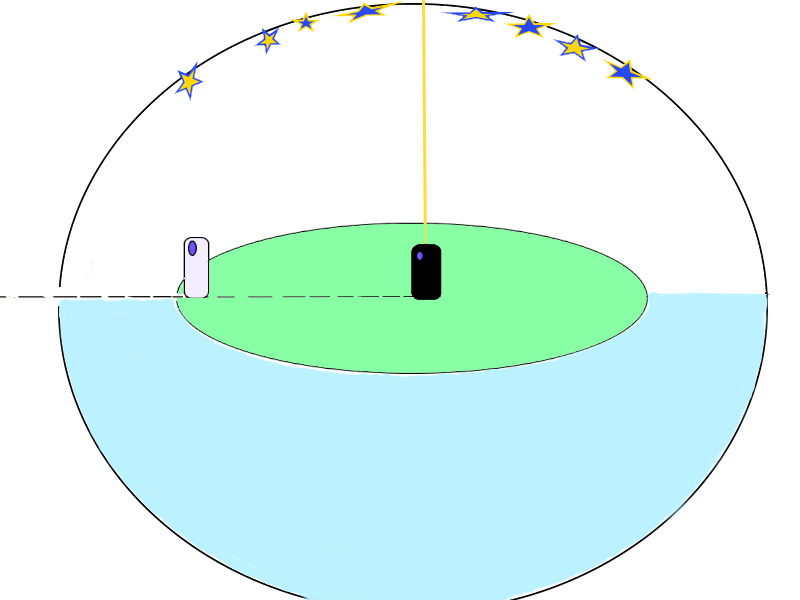
Part I reads Tolkien's Beowulf criticism of 1936 by putting together two compositions of that year: 'The Fall of Númenor' and 'Beowulf: the Monsters and the Critics'. 'The Fall of Númenor' gives Tolkien's reading of the exordium to Beowulf, which tells of two ships that sail on the Sea. 'Beowulf: the Monsters and the Critics' extends the 'Straight Road' of Scyld Scefing/Elendil inland to Doom. Together the two texts generate the image above, which is a picture of how a Christian tells a story out of the ancient heathen Northern past. In a nutshell, while the world is known to be round, the arena of action is the mythological flat-world surrounded by the Shoreless Sea, and the mythological monsters are the enemies of both God in heaven (outside the circle of the world) and the gods in Valinor (differently outside the circle of the world).
Part II reads Return of the Shadow and the other early drafts of The Lord of the Rings to show how Tolkien's Beowulf criticism of 1936 became the hidden design of the new Hobbit story. This happens within the first year of composition as the magic ring becomes the One Ring, the conception of which is founded on the idea of the Straight Road (the horizontal dashed line in the image above). But the design of the Anglo-Saxon story is also transformed as Doom at the center, which was simply death by mythological monster, becomes the Dark Tower + Mount Doom, and Sauron the Necromancer becomes an agent, not of death, but of a magical escape from death into the deathless state of the Ringwraith.
Part III reads the published Lord of the Rings and shows that the Elf-tower on the western margin of the story is actually its hidden center, once the providential aid of Elbereth in Valinor is recognized.
An epilogue will observe that the Elf-tower of The Lord of the Rings is the Anglo-Saxon tower that is Beowulf in the allegory told in 'Beowulf: the Monsters and the Critics'. The Lord of the Rings is revealed as Tolkien's ultimate exercise in Beowulf criticism.
Spiral Staircase:
The Design of The Lord of the Rings
Part I: Anglo-Saxon Tower
Part II: Dark Tower
Part III: Elf-tower
--------------------
Part I reads Tolkien's Beowulf criticism of 1936 by putting together two compositions of that year: 'The Fall of Númenor' and 'Beowulf: the Monsters and the Critics'. 'The Fall of Númenor' gives Tolkien's reading of the exordium to Beowulf, which tells of two ships that sail on the Sea. 'Beowulf: the Monsters and the Critics' extends the 'Straight Road' of Scyld Scefing/Elendil inland to Doom. Together the two texts generate the image above, which is a picture of how a Christian tells a story out of the ancient heathen Northern past. In a nutshell, while the world is known to be round, the arena of action is the mythological flat-world surrounded by the Shoreless Sea, and the mythological monsters are the enemies of both God in heaven (outside the circle of the world) and the gods in Valinor (differently outside the circle of the world).
Part II reads Return of the Shadow and the other early drafts of The Lord of the Rings to show how Tolkien's Beowulf criticism of 1936 became the hidden design of the new Hobbit story. This happens within the first year of composition as the magic ring becomes the One Ring, the conception of which is founded on the idea of the Straight Road (the horizontal dashed line in the image above). But the design of the Anglo-Saxon story is also transformed as Doom at the center, which was simply death by mythological monster, becomes the Dark Tower + Mount Doom, and Sauron the Necromancer becomes an agent, not of death, but of a magical escape from death into the deathless state of the Ringwraith.
Part III reads the published Lord of the Rings and shows that the Elf-tower on the western margin of the story is actually its hidden center, once the providential aid of Elbereth in Valinor is recognized.
An epilogue will observe that the Elf-tower of The Lord of the Rings is the Anglo-Saxon tower that is Beowulf in the allegory told in 'Beowulf: the Monsters and the Critics'. The Lord of the Rings is revealed as Tolkien's ultimate exercise in Beowulf criticism.
Eat earth. Dig deep. Drink water.
- Points: 4 777
Tree
Posts: 3136
Joined: Sun May 17, 2020 7:54 pm
- Points: 4 777
Tree
Posts: 3136
Joined: Sun May 17, 2020 7:54 pm
I have a question about the title of my book. Here are two options, which is the better?
(1) Spiral Staircase: the Design of The Lord of the Rings
(2) A Hobbit's Guide to Stairs: the Design of The Lord of the Rings
@Saranna, @Drifa, @Rivvy Elf, @Rivvy Elf, @Arnyn, @Priya, and Aiks.
Thanks
(1) Spiral Staircase: the Design of The Lord of the Rings
(2) A Hobbit's Guide to Stairs: the Design of The Lord of the Rings
@Saranna, @Drifa, @Rivvy Elf, @Rivvy Elf, @Arnyn, @Priya, and Aiks.
Thanks
Eat earth. Dig deep. Drink water.
- Points: 6 930
Steward of Gondor
Posts: 3613
Joined: Thu May 14, 2020 3:34 pm
Oh that is a tough one, @Chrysophylax Dives . My head says option 1, my heart option 2.
Arnyn ~ Honor & Valor
Kaylin ~ Joy & Strength
Kaylin ~ Joy & Strength
- Points: 3 819
Mahal
Posts: 3176
Joined: Wed Aug 05, 2020 3:32 pm
I would go with 2.
The world was fair in Durin's Day.
- Points: 2 817

New Soul
Posts: 3091
Joined: Thu Sep 02, 2021 6:24 am
Chrys: Number two sounds a professionally perfect. It is the one I would take, in your case.  Proficiat on the almost finished book, good achievement.
Proficiat on the almost finished book, good achievement. Just call me Aiks or Aikári. Notify is off.
Find me stuff in Gondolin.
And let us embark to Valinor!
Find me stuff in Gondolin.
And let us embark to Valinor!
- Points: 4 777
Tree
Posts: 3136
Joined: Sun May 17, 2020 7:54 pm
@VelvetineZone, I thought I had mentioned you in this but see that I did not. I'd especially value your opinion here. While above a consensus of the heart is developing that (2) is the way to go, the thing is that 'A Hobbit's Guide to Stairs' was the title of a series of posts that I published on the plaza every Wednesday many moons ago. I wonder if that gives this title an appeal because of familiarity. (I am aware that I am biased towards (2) because I really loved that series of posts.) I hope you don't mind me mentioning you and asking specifically for your take on this?Chrysophylax Dives wrote: ↑Mon Feb 24, 2025 4:10 am I have a question about the title of my book. Here are two options, which is the better?
(1) Spiral Staircase: the Design of The Lord of the Rings
(2) A Hobbit's Guide to Stairs: the Design of The Lord of the Rings
@Saranna, @Drifa, @Rivvy Elf, @Rivvy Elf, @Arnyn, @Priya, and Aiks.
Thanks
Thanks

PS. Aiks, Drifa, and Arnyn - many thanks for your input! It is appreciated. Also, if you have a take on my point in this post I'd like to hear it. What I mean is that the series 'A Hobbit's Guide to Stairs' maybe accustomed all of us to such a title, and maybe it does not have the same appeal to those beyond the plaza who never read this wonderful series?
Btw, and for what it is worth, the 'Hobbit's Guide to Stairs' is the only thing that I've ever written that I feel able to speak about in such glowing terms. While this book I am completing will be good, even very good, and certainly better than anything hitherto published on The Lord of the Rings (or Tolkien's Beowulf studies for that matter), it will still lack the magic of the Guide.
Eat earth. Dig deep. Drink water.
- Points: 6 930
Steward of Gondor
Posts: 3613
Joined: Thu May 14, 2020 3:34 pm
@Chrysophylax Dives You have put into words the reason why my heart says 2. Without actually reading your book, but basing myself on the overview you have given in one of the posts above, my head feels like option 1 is more academic and less literary. If that all makes sense?
Arnyn ~ Honor & Valor
Kaylin ~ Joy & Strength
Kaylin ~ Joy & Strength
- Points: 325

Learned Ent
Posts: 266
Joined: Sat Jul 27, 2024 7:55 pm
Hi @Chrysophylax Dives,
As it happens I did see this pick a title post earlier whilst browsing the site and immediately preferred 2.
As it happens I did see this pick a title post earlier whilst browsing the site and immediately preferred 2.
Last edited by VelvetineZone on Mon Feb 24, 2025 3:47 pm, edited 1 time in total.
- Points: 325
Learned Ent
Posts: 266
Joined: Sat Jul 27, 2024 7:55 pm
Thanks for asking.
- Points: 4 777
Tree
Posts: 3136
Joined: Sun May 17, 2020 7:54 pm
Thank you all for your input. I have taken it to heart.
@VelvetineZone, my pleasure.
And it is all good. I've just gone and changed the title on the relevant Word docs. So now I am back on 'A Hobbit's Guide to Stairs' - yayayayayay!

@VelvetineZone, my pleasure.
And it is all good. I've just gone and changed the title on the relevant Word docs. So now I am back on 'A Hobbit's Guide to Stairs' - yayayayayay!
Eat earth. Dig deep. Drink water.
- Points: 2 817
New Soul
Posts: 3091
Joined: Thu Sep 02, 2021 6:24 am
Sure.
Just call me Aiks or Aikári. Notify is off.
Find me stuff in Gondolin.
And let us embark to Valinor!
Find me stuff in Gondolin.
And let us embark to Valinor!
- Points: 4 777
Tree
Posts: 3136
Joined: Sun May 17, 2020 7:54 pm
Book update
A Hobbit's Guide to Stairs:
The Design of The Lord of the Rings
Part I: Anglo-Saxon Tower
Part II: Dark Tower
Part III: Elf-tower
--------------------
I'm taking a week out from writing. Before Christmas I attempted a book proposal, which requires seeing the whole, and discovered that I could not and concluded that I had to write the book first. So, since the new year I have completed Parts I and III and the first chapter of II. (Each of the 3 parts contains 5 chapters of around 3700 words.) When I return the aim will be to carry on writing until I finish. That will require, in addition to 4 more chapters, tidying up the previous chapters in light of the argument and flow of the book as a whole, and composing both an Introduction and an Epilogue. Than I will pen two overviews of the whole, one of 3 paragraphs and one of 1 paragraph. When I have those I will know that I am done. So long as a new administration that takes no prisoners has not banned me, I'll post the one paragraph summary below.
A Hobbit's Guide to Stairs:
The Design of The Lord of the Rings
Part I: Anglo-Saxon Tower
Part II: Dark Tower
Part III: Elf-tower
--------------------
I'm taking a week out from writing. Before Christmas I attempted a book proposal, which requires seeing the whole, and discovered that I could not and concluded that I had to write the book first. So, since the new year I have completed Parts I and III and the first chapter of II. (Each of the 3 parts contains 5 chapters of around 3700 words.) When I return the aim will be to carry on writing until I finish. That will require, in addition to 4 more chapters, tidying up the previous chapters in light of the argument and flow of the book as a whole, and composing both an Introduction and an Epilogue. Than I will pen two overviews of the whole, one of 3 paragraphs and one of 1 paragraph. When I have those I will know that I am done. So long as a new administration that takes no prisoners has not banned me, I'll post the one paragraph summary below.
Eat earth. Dig deep. Drink water.
- Points: 4 777
Tree
Posts: 3136
Joined: Sun May 17, 2020 7:54 pm
Below is just me thinking out loud...
In the first instance, this is a picture of the whole of Tolkien's Beowulf criticism, as read out of 'Beowulf: the Monsters and the Critics'. The white tower is the poem as pictured in the introductory allegory. This story concludes with the builder of the tower looking out to sea, and Tolkien in his lecture then enacts a 'critical turn' from the sea to doom inland at the center - the dragon, the last battle with the monsters who are enemies of the One God in heaven but also the old heathen gods, who have now vanished over the sea beyond the western frame of the poem. A critical turn on the top of this tower brings into view the 'straight road', which in Tolkien's Beowulf criticism is a (fading) memory of the ancient mythical line of the world of the old stories. To use the terminology of 'On Fairy-stories', it is a memory of the shape of the secondary-world of the old heathen traditions that these now Christian English folk brought with them in their migration over the sea and still tell; but as the generations pass this memory of the secondary world of the native myths is dissolving. The 'straight road' is that in Beowulf that recalls this memory in the intended audience back in the 8th century. What is recalled is not merely the shape of the flat-world of the ancient myths but also the great heathen drama of defeat in Time, with tales of immortal warriors and their mortal allies marching down this straight road to their doom. Everything has its time, all die, and even the immortal gods are defeated in Time; now they have vanished.
In the second instance, this is a picture of the design of The Lord of the Rings. As such, there are two variations in its reading in relation to the Beowulf criticism above: (i) the Anglo-Saxon poem presupposes a Ptolemaic universe while Tolkien's mythology avoids the very idea of a round, spherical cosmos; (ii) at the center is no longer the dragon as a symbol of death but the Eye in the Dark Tower, a symbol of necromancy, the black magic that denies death and so generates a Ringwraith commanded by the Eye that walks the straight road the wrong way, walking towards us.
Once these two variations are taken into account The Lord of the Rings comes into view as an extended essay in Beowulf criticism, enacted as a sequel to the original story of a man in a tower that commands a view of sea, sky, and doom inland.
In the first instance, this is a picture of the whole of Tolkien's Beowulf criticism, as read out of 'Beowulf: the Monsters and the Critics'. The white tower is the poem as pictured in the introductory allegory. This story concludes with the builder of the tower looking out to sea, and Tolkien in his lecture then enacts a 'critical turn' from the sea to doom inland at the center - the dragon, the last battle with the monsters who are enemies of the One God in heaven but also the old heathen gods, who have now vanished over the sea beyond the western frame of the poem. A critical turn on the top of this tower brings into view the 'straight road', which in Tolkien's Beowulf criticism is a (fading) memory of the ancient mythical line of the world of the old stories. To use the terminology of 'On Fairy-stories', it is a memory of the shape of the secondary-world of the old heathen traditions that these now Christian English folk brought with them in their migration over the sea and still tell; but as the generations pass this memory of the secondary world of the native myths is dissolving. The 'straight road' is that in Beowulf that recalls this memory in the intended audience back in the 8th century. What is recalled is not merely the shape of the flat-world of the ancient myths but also the great heathen drama of defeat in Time, with tales of immortal warriors and their mortal allies marching down this straight road to their doom. Everything has its time, all die, and even the immortal gods are defeated in Time; now they have vanished.
In the second instance, this is a picture of the design of The Lord of the Rings. As such, there are two variations in its reading in relation to the Beowulf criticism above: (i) the Anglo-Saxon poem presupposes a Ptolemaic universe while Tolkien's mythology avoids the very idea of a round, spherical cosmos; (ii) at the center is no longer the dragon as a symbol of death but the Eye in the Dark Tower, a symbol of necromancy, the black magic that denies death and so generates a Ringwraith commanded by the Eye that walks the straight road the wrong way, walking towards us.
Once these two variations are taken into account The Lord of the Rings comes into view as an extended essay in Beowulf criticism, enacted as a sequel to the original story of a man in a tower that commands a view of sea, sky, and doom inland.
Eat earth. Dig deep. Drink water.
- Points: 4 777
Tree
Posts: 3136
Joined: Sun May 17, 2020 7:54 pm
I think the two variations are readily accounted for. The Ptolemaic cosmos reappears, as it were, as an Elvish Stone of far-seeing, while the transformation of Doom from death into (a) Necromancy and (b) the end of the Third Age merely brings to the center that which Tolkien discerns flickering on or just below the surface of Beowulf. Obviously, it will take a chapter to show this to be the case. In the meanwhile, I step over the two variations and into the really interesting identity, which is an identity of the hidden. What is hidden in analogous ways in both works, the Anglo-Saxon poem and The Lord of the Rings, is the 'straight road'. A vision of the 'straight road' is the fruit of Tolkien's Beowulf criticism, it is that which he discerns presupposed by the poet in the (collective) memory of the intended audience - it is in origin an Anglo-Saxon memory of the world of story of their native, oral English-language traditions; a memory of doomed immortality that is presupposed by the poet as itself doomed in history, a meaning of the heathen tradition still perceptible to the poet but only after close inspection, already vanishing, doomed to be utterly forgotten in the face of a new teaching of Eternity.
Basically, from the moment that Peregrin Boffin the Hobbit met at Bree becomes Aragorn the heir of Elendil, and the end of the Third Age is imagined, Tolkien knows that he requires a second version of 'The Fall of Númenor', a later telling of the same tale in which the world was always round and the 'straight road' is only a symbol, a way of talking that is known not to be so. The way to bring out what he is aiming for here is to chart the very late and very careful weaving of the history of Númenor (not the exiles of Elendil and his heirs but the island and its downfall) into the appendices of The Lord of the Rings, for the matter of Númenor though alluded to on rare occasion (Faramir) is only addressed in the appendices, and there it is (deliberately) far from clear what is the 'straight road'.
Basically, from the moment that Peregrin Boffin the Hobbit met at Bree becomes Aragorn the heir of Elendil, and the end of the Third Age is imagined, Tolkien knows that he requires a second version of 'The Fall of Númenor', a later telling of the same tale in which the world was always round and the 'straight road' is only a symbol, a way of talking that is known not to be so. The way to bring out what he is aiming for here is to chart the very late and very careful weaving of the history of Númenor (not the exiles of Elendil and his heirs but the island and its downfall) into the appendices of The Lord of the Rings, for the matter of Númenor though alluded to on rare occasion (Faramir) is only addressed in the appendices, and there it is (deliberately) far from clear what is the 'straight road'.
Eat earth. Dig deep. Drink water.
- Points: 4 777
Tree
Posts: 3136
Joined: Sun May 17, 2020 7:54 pm
Penned in August 1938, a first glimpse of Time following Tolkien's decision to integrate the myth of Númenor into his mythology. Tolkien draws Time into the world of his new Hobbit story by the voice of Tom Bombadil, who is an aborigine, Ab-Origine, without origin, and has seen all of Time pass by his door step. Tom had been singing of the ancient history of the North Kingdom but here passes over Númenor and so steps out of a round world and into a flat-Earth 'when the world was wider, and the seas flowed straight to the western Shire'.When they caught his words again they found that he had now wandered into strange regions beyond their memory and beyond their waking thought, into times when the world was wider, and the seas flowed straight to the western Shore; and still further Tom went singing back before the Sun and before the Moon, out into the old starlight, when only the Elf-sires were awake. Then suddenly he stopped, and they saw that he nodded as if he was falling asleep. The hobbits sat still before him, enchanted; and it seemed as if, under the spell of his words, the wind had gone, and the clouds had dried up, and the day had been withdrawn, and darkness had come from East and West, and all the sky was filled with the light of white stars.
As he steps over Númenor, Tom nods to the 'straight road' which runs from Valinor over the bent sea, past the Elf-tower to the west of the Shire, and on inland to Mordor, to the Dark Tower and Mount Doom. The straight road is the line of ancient myth that is invisible in the round world of history. The myth of Númenor tells how Númenor and Valinor were (differently) vanished, that is, became part of the invisible realm of myth. In this new Hobbit story, however, what has vanished are people, ex-owners of magic rings, who become Ringwraiths who walk down the straight road in the wrong direction. The meaning of this straight road will be discovered on Weathertop, when the Hobbit puts on the magic ring and the invisible realm of myth is rendered visible to his eyes, even as his body vanishes before his flesh and blood friends.
But Tom sings further back, to the ancient starlight before the moon and the sun.
What I am wondering is whether the mystery that is Tom Bombadil and the Ring (that does not work on him) is established here with Tom's autobiography. If the nature of the Ring is given by the straight road, which itself is the superimposition of vanished ancient myth within the visible world of the present, possibly the deal with the Ring not working on Tom is because he remembers the days before ancient myth, before the Elves awoke and - maybe - before the Valar and Maia entered into the world from the Outside.‘I am an Aborigine, that’s what I am, the Aborigine of this land. Mark my words, my merry friends: Tom was here before the River or the Trees. Tom remembers the first acorn and the first rain-drop. He made paths before the Big People, and saw the Little People arriving. He was here before the kings and the graves and the [ghosts >] Barrow-wights. When the Elves passed westward Tom was here already - before the seas were bent. He saw the Sun rise in the West and the Moon following, before the new order of days was made. He knew the dark under the stars when it was fearless — before the Dark Lord came from Outside.’
Eat earth. Dig deep. Drink water.

