Part 3: The Opening Command – Simply Childe’s Play
This section has been split into three parts. The themes discussed under the first two subtitles will aid a deeper understanding of the revelation in the final subsection.
Without doubt Tom and Goldberry are gelling together thematically with fays, fairy-stories and faërie. The links are becoming strong. And while right now Tolkien’s choice of ‘Lugh’ is intriguing and somewhat bemusing, the real reason will soon become quite clear. However, for the fog-bound hill episode there is one vital piece of the puzzle missing. One link is still needed to bring them all and in the darkness bind them.
If I am right, for the first time we have already grasped much of the true story behind the Barrow-downs adventure. However, we will soon fully comprehend what happened between the sojourn at the green-mounded hill and Frodo’s capture by the Barrow-wight.
When it comes to fairyland – Tolkien’s masterstroke has yet to be revealed. It is so subtly concealed that the embedding is a piece of literary genius to be marveled at. We shall finally understand the mechanism behind ‘the way in’. Exposed will be the ‘Open Sesame’ command and how masterfully Tolkien linked it to English fairy tale!
Adults and Detail
A matter unrecognized among general readers, and perhaps some scholars, is that at outset Tolkien envisaged
The Lord of the Rings to be of roughly similar length to
The Hobbit. At a point some fourteen months after first putting pen to paper, he felt he was over halfway through as:
“… The Lord of the Rings – had reached Chapter 12 (and had been re-written several times), running to over 300 MS. pages …”,
–
The Letters of J.R.R. Tolkien, Letter #35 – 2 February 1939, Edited by H. Carpenter, 1981
requiring an additional:
“… 200 at least to finish the story that has developed.”
–
The Letters of J.R.R. Tolkien, Letter #35 – 2 February 1939, Edited by H. Carpenter, 1981
Aiming for around 20 chapters (assuming ~60 percent had already been written), the entire tale would have run to about where
Farewell to Lórien ends up being in the finished item. Anticipated was a relatively short production, and knowing so we must realize that the entire Bombadil & Barrow-downs episode would have constituted a substantial part of the book. Given as much, we ought not to be surprised if Tolkien input intense effort into the early chapters. And indeed he did – of a scholastic nature. For far more academic material was inserted than will ever come across no matter how many re-readings are undertaken. That is unless the reader is well-acquainted with botany, fairy tales, European mythologies, medieval works, Christianity – and can connect the ingenious infusion of all five within the text.
The Easton Press Editions of Tolkien’s most famous Works
(Side-by-side thickness comparisons are deceptive)
For these initial twelve chapters Tolkien complained:
“The writing of The Lord of the Rings is laborious, because I have been doing it as well as I know how, and considering every word.”
–
The Letters of J.R.R. Tolkien, Letter #35 – 2 February 1939, Edited by H. Carpenter, 1981
Not that the rest was less diligently crafted:
“It is written in my life-blood, …”.
–
The Letters of J.R.R. Tolkien, Letter #109 – 31 July 1947, Edited by H. Carpenter, 1981
“… I am a pedant devoted to accuracy, even in what may appear to others unimportant matters.”
– The Letters of J.R.R. Tolkien, Letter #294 – 8 February 1967, Edited by H. Carpenter, 1981
The Professor had poured his heart and soul into the exercise. Using immense skill he left an underlying structure which few have fully comprehended; and that is especially true when it comes to Tom and Goldberry. Such attention to detail was particularly necessary because the targeted audience was an older age group – a faction more critical and certainly less forgiving than young folk:
“I really meant it was running its course, and forgetting ‘children’, and was becoming more terrifying than the Hobbit. It may prove quite unsuitable. It is more ‘adult’ …”,
–
The Letters of J.R.R. Tolkien, Letter #34 – 13 October 1938, Edited by H. Carpenter, 1981 (Tolkien’s emphasis)
“I think The Lord of the Rings is in itself a good deal better than The Hobbit, but it may not prove a very fit sequel. It is more grown up – but the audience for which The Hobbit was written has done that also.”
–
The Letters of J.R.R. Tolkien, Letter #35 – 2 February 1939, Edited by H. Carpenter, 1981
Already a flavor of the professional criticism to come had been received from both peer writers and the media in the aftermath of
The Hobbit. For example, the then-acclaimed author Arthur Ransome had quibbled about an irksome inconsistency of:
“… Gandalf’s use of the term ‘excitable little man’ as a description of Bilbo. He cited other, similar uses of ‘man’ or ‘men’ to describe dwarves and goblins.”
-
The Letters of J.R.R. Tolkien, Letter #20 notes – 19 December 1937, Edited by H. Carpenter, 1981 (Editor’s emphasis)
Even more worryingly
The Observer had published a letter questioning the originality of the name: ‘Hobbit’. Tolkien vigorously defended the story’s core invention but readily admitted some minor discrepancies had crept in, and improvements were desirable. Still, he had been primed as to the type and depth of critiquing to come.
So though Tolkien had been conditioned to expect research, only under specific circumstances would it be sanctioned for
The Lord of the Rings:
“When they have read it, some readers will (I suppose) wish … to analyze it, … they are, of course, at liberty to do these things – so long as they have first read it with attention throughout.”
–
The Letters of J.R.R. Tolkien, Letter #329 – October 1971, Edited by H. Carpenter, 1981 (Tolkien’s italicized emphasis on ‘first’)
It had to be diligently performed, be objective in nature and undertaken with careful thought. Those are obvious baseline criteria for a pedantic philologist – because in no uncertain terms Tolkien demanded we pay attention to the text. However while still alive, he felt independently conducted research was unnecessary as he was always there to be directly asked:
“I do not know why they should research … after all, I hold the key.”
–
Niekas interview, late spring 1967
Cover of Niekas Fanzine #18 – containing transcript of Tolkien interview, 1967
The trouble with all this is that the Professor, though willing to expand on many topics, was reluctant to give us the keys to Bombadil. Whenever asked, the questions were deflected or cryptically responded to. So to ferret out answers we are left with limited options. Nevertheless, our quest requires us to take a path.
The path I have chosen – is one that really is not so strange. Indeed, it is one we can discern from many of his comments as entirely valid. A roadway paved of blended mythology and fairy tale was simply a continuation of the themes underlying
The Hobbit. The road headed in the right direction, because undoubtedly noted was glowing published praise.
The Observer was a highly reputable English newspaper of the time whose opinions carried weight:
“ ‘… one of the book’s charms appears to be its Spenserian harmonising of the brilliant threads of so many branches of epic, mythology, and Victorian fairy literature.’ ”
–
The Letters of J.R.R. Tolkien, Letter #25 – early 1938, Edited by H. Carpenter, 1981
Tolkien confirmed the approach had mostly been correctly interpreted:
“As for the rest of the tale it is, … derived from (previously digested) epic, mythology, and fairy-story …”.
–
The Letters of J.R.R. Tolkien, Letter #25 – early 1938, Edited by H. Carpenter, 1981
And so encouraged by success, it is fairly obvious that following a tried and tested route was a no-brainer when it came to
The Lord of the Rings:
“There ought to be things that people who liked the old mixture will find to have a similar taste.”
–
The Letters of J.R.R. Tolkien, Letter #35 – 2 February 1939, Edited by H. Carpenter, 1981
His own tastes echoed the desires of many others. Nor was he afraid to admit the internal seed came deeply implanted:
“But an equally basic passion of mine ab initio was for myth (not allegory!) and for fairy-story, and above all for heroic legend on the brink of fairy-tale and history, …”.
–
The Letters of J.R.R. Tolkien, Letter #131 – late 1951, Edited by H. Carpenter, 1981
A later admission relates how relieved he felt knowing his long-standing belief was vilified:
“… it remains an unfailing delight to me to find my own belief justified: that the ‘fairy-story’ is really an adult genre, …”.
–
The Letters of J.R.R. Tolkien, Letter #159 – 3 March 1955, Edited by H. Carpenter, 1981 (Tolkien’s emphasis)
‘So where are we heading?’ one might ask.
‘There’s nothing radical here – it’s common knowledge Tolkien tailored
The Lord of the Rings towards adults, and his extraordinary efforts in formulating the text are equally well-known among scholars’:
“Hardly a word in its 600,000 or more has been unconsidered. And the placing, size, style, and contribution to the whole of all the features, incidents, and chapters has been laboriously pondered.”
–
The Letters of J.R.R. Tolkien, Letter #131 – late 1951, Edited by H. Carpenter, 1981
… to be continued
 It's a fun tale in a child's imagination. That are many more of them. But not all English fairytales I do know. It is more an amalgation between Dutch and German or French fairytales on the mainland. It is not Tom Thumb, but Little Thumb (Klein Duimpje). The kid is not taller than your thumb. The giant is an Ogr in the tale.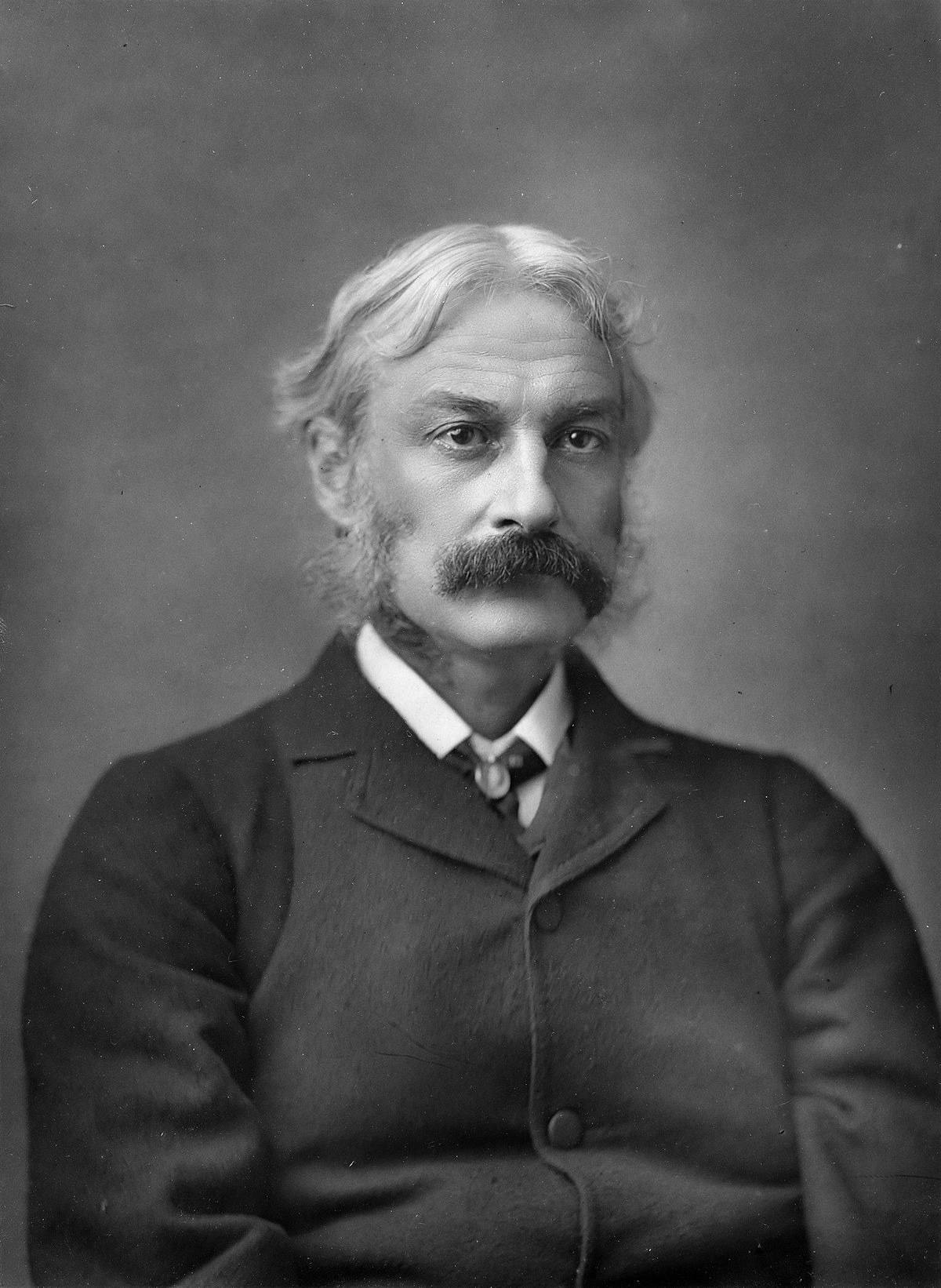
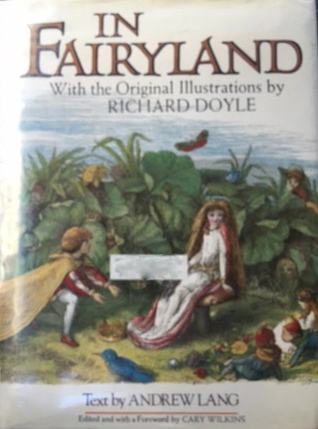
 The more the merrier. *g* Widdershins? I never came across in the thirty years of the Legendarium reading. That is new to me. True the Barrowdawns never had my imagination really or better my appreciation. Mine starts really with the Fellowship and the Dwarf and Elf developing friendship. What is it with the photo of Andrew Lang? That puzzles me a bit.
  Did Prof. Tolkien hold a lecture about this writer that you know off?